Image

Research
Research
The LGEF develops several types of composites for their multifunctional properties. The polymers used include PDMS, P(VDF-TrFE-VFE), PVDF, PU, among others, while the fillers vary in nature and size depending on the targeted applications. These fillers may be commercially available or synthesized in-house at the LGEF.
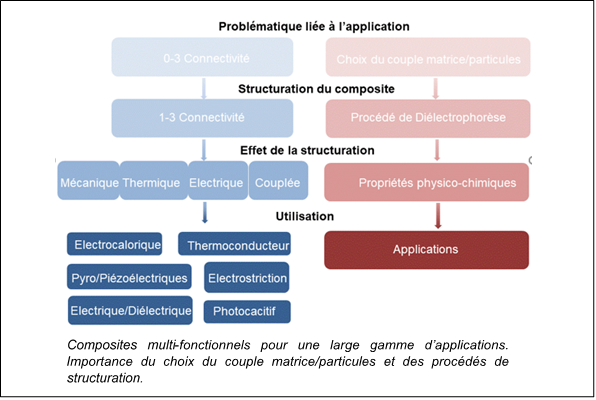
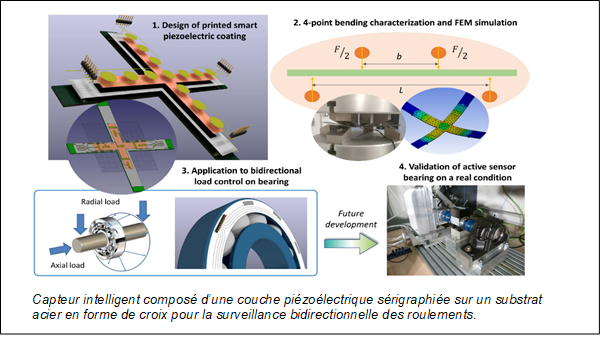
The composite approach makes it possible, through an appropriate selection of matrix/particle pairs, to create synergy between the good thermal and mechanical properties of polymers and the high electroactive properties of particulate ceramics. From these functional materials, it becomes possible either to add functionality to a structure through additive processes or, in the case of polymer components, to directly integrate a new sensing functionality within the material itself—without modifying the system from a structural standpoint.
Piezoelectric composites in the so-called 0–3 configuration consist of a particulate piezoelectric ceramic phase randomly dispersed within a polymer matrix. These composites are promising candidates for sensors integrated into structural composites.
https://www.mdpi.com/2073-4360/15/4/826#
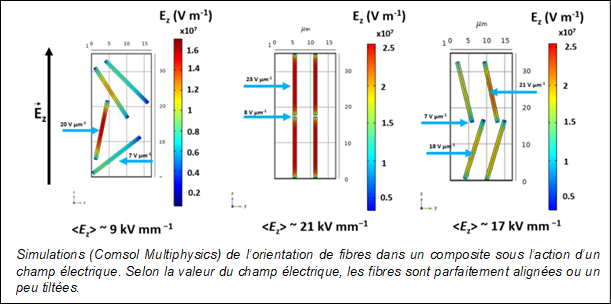
While exhibiting suitable mechanical properties, these composites inherently display relatively low piezoelectric properties, such as a low piezoelectric charge coefficient (d33) and a moderate piezoelectric voltage coefficient (g33). These limited piezoelectric performances result from the restricted connectivity of the ceramic phase which, combined with the large dielectric mismatch between the two phases, leads to an unfavorable electric field distribution within the composite.
More advantageous connectivity can be achieved by incorporating very high volume fractions of piezoelectric ceramic powder in a 0–3 composite. However, this significantly reduces the mechanical failure strain while only moderately improving piezoelectric performance. An alternative is the 1–3 composite configuration, in which continuous aligned particles or fibers, or precisely shaped piezoelectric pillars, are embedded within the polymer matrix.
https://doi.org/10.1016/j.matdes.2022.111195
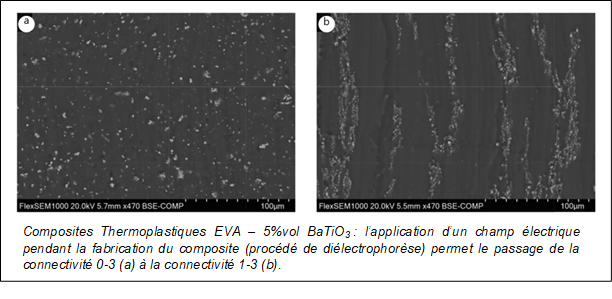
https://doi.org/10.3390/ijms232415745
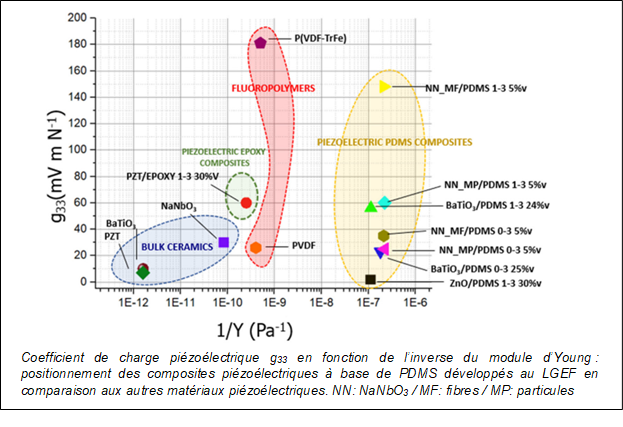
https://doi.org/10.1016/j.matdes.2022.111195
Magnetic composites can be fabricated via solvent processing using the thermoplastic polymer acrylonitrile butadiene styrene (ABS) combined with iron oxide (Fe₃O₄).
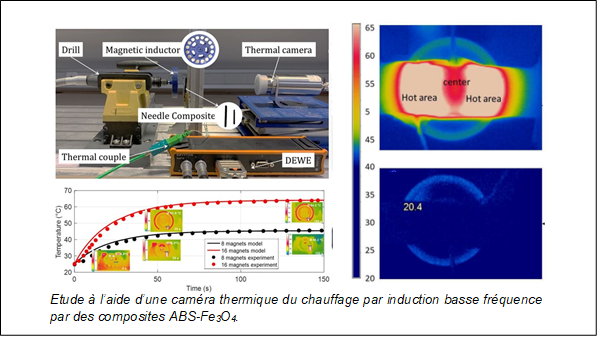
https://doi.org/10.3390/polym12020386
Hybrid electrically conductive composites represent a significant advancement in the field of functional materials. These composites combine the properties of different materials to create optimized solutions in terms of electrical conductivity, flexibility, and mechanical strength.
Hybrid composites are typically composed of a polymer matrix incorporating conductive fillers such as carbon nanotubes, graphene, or metallic particles. This combination enables the development of lightweight, flexible materials with excellent electrical conductivity.
These materials find a wide range of applications, particularly in electronic devices, batteries, and electric vehicles. Their ability to dissipate heat and maintain stable performance under varying conditions makes them strong candidates for advanced technologies.
In summary, hybrid electrically conductive composites offer a promising solution to current challenges in electronics and energy by combining light weight, flexibility, and high performance.
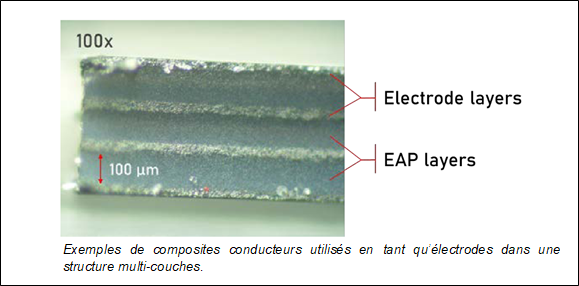
https://theses.hal.science/tel-03186873
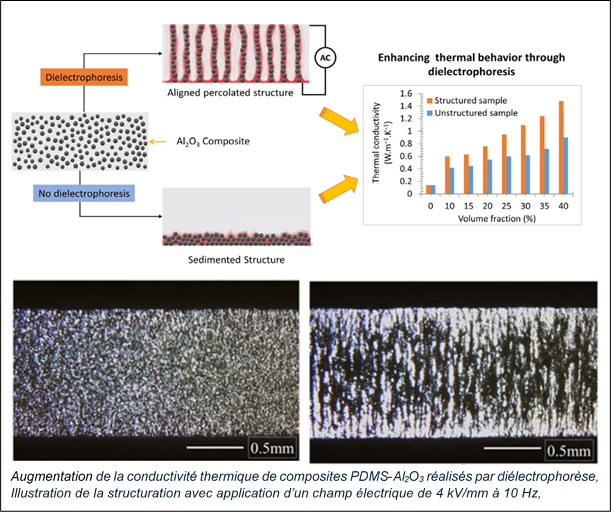
Des composites polydiméthylsiloxane - alumine (PDMS-Al2O3) réalisés avec structuration diélectrophorétique montrent une augmentation significative de la conductivité thermique. Ces composites polymères performants à haute conductivité thermique suscitent un fort intérêt dans le milieu industriel pour dissiper la chaleur dans les dispositifs électroniques.